 Tecnon Smart Display Technology Shenzhen Co., Ltd.
 A stage LED display is only as reliable as its installation. Even high-quality panels can fail to deliver results if the setup process is rushed or poorly planned. For live events, concerts, touring shows, and corporate stages, correct installation directly affects safety, visual performance, and project success.
This article focuses on installation and setup practices, it is designed for professionals who already understand what a event LED display is and want to install it correctly and safely. For a complete overview of selection criteria, budgeting, and supplier evaluation, refer to our stage LED screen buying guide, which covers the full procurement process for professional events.
Why Proper Stage LED Display Installation Matters
Stage environments are dynamic. Load changes, audience movement, lighting heat, and wind all create stress on the display system. A correct installation:
- Protects audience and staff safety
- Ensures stable image performance
- Reduces on-site troubleshooting
- Extends the lifespan of the LED display
For rental companies and event contractors, a standardized installation process also improves efficiency and reduces labor cost.
Common Installation Methods for Stage LED Display
Different events require different installation structures. Choosing the right method depends on venue conditions and show design.
Truss Hanging Installation
This is one of the most common methods for concerts and touring shows. The event LED display hangs from aluminum or steel trusses using certified rigging hardware.
Key considerations:
- Load-bearing capacity of the truss
- Safety chains and backup support
- Even weight distribution
This method offers flexibility in screen size and shape, which suits creative stage designs.
Ground Support Installation
Ground support structures are used when roof load is limited or outdoor conditions require stronger vertical support.
Advantages:
- Higher stability for large LED walls
- Easier maintenance access
- Better wind resistance when designed correctly
This method is common for outdoor festivals and large-scale performances.
Fixed Stage Frame Installation
Some theaters and indoor venues use semi-permanent frames. The stage LED display mounts directly to a structural frame behind the stage.
This setup improves alignment accuracy and reduces repeated assembly time for recurring events.
If the project involves short-term events or permanent venues, the differences between these approaches are discussed in rental and fixed LED stage screen setups, including how they affect structure and workflow.
Structural Safety Checks Before Installation
Before installing a stage LED display, always complete structural verification. This step is often underestimated but critical.
Checklist:
- Confirm total screen weight, including cabinets and cables
- Verify truss or support system load rating
- Inspect all connectors, locks, and hanging bars
- Ensure the floor or ground is level
Skipping these checks increases the risk of deformation, screen gaps, or safety incidents.
Power Distribution and Signal Setup
Power Planning
Stage LED displays require stable and evenly distributed power. Always:
- Use dedicated power lines
- Balance load across power supplies
- Prepare backup power for critical events
Outdoor stages should use waterproof connectors and raised cable routing.
Signal Management
A clean signal layout prevents flicker, black screens, and synchronization issues.
Best practices include:
- Short, well-labeled signal paths
- Redundant signal loops for large screens
- Secure cable fixing to avoid movement during the show
Professional controllers and processors help maintain stable image output.
Factors like refresh rate, brightness, and pixel pitch are also covered in our article on performance LED screen specifications for stage use.
Screen Alignment and Flatness Adjustment
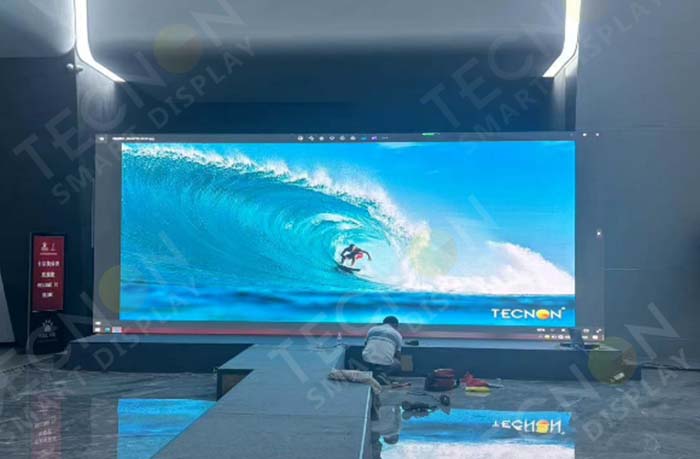
After mounting, alignment becomes the next priority. Even small cabinet gaps can affect image quality.
Steps include:
- Mechanical alignment of cabinets
- Lock adjustment to remove seams
- Flatness correction across the entire screen
A well-aligned stage LED display delivers better visual continuity and camera-friendly results.
Brightness and Color Calibration On Site
Stage lighting conditions differ from one event to another. On-site calibration ensures the screen matches the environment.
Key tasks:
- Adjust brightness to avoid glare
- Match color temperature with stage lights
- Perform grayscale calibration if needed
This step improves visual comfort for both live audiences and camera recording.
Environmental and Outdoor Setup Considerations
Outdoor installations require extra attention.
Important factors:
- Wind load calculation
- Rain and moisture protection
- Temperature-related expansion
Outdoor stage LED displays often use higher IP-rated cabinets and reinforced frames to maintain stability during changing weather.
For events in different venues, our comparison of indoor and outdoor show LED screens highlights how environment influences installation choices.
Installation Time Management for Live Events
Event schedules are tight. Efficient setup saves time and reduces stress.
Tips for faster installation:
- Use standardized cabinet sizes
- Prepare cables and modules in advance
- Assign clear roles to the installation team
Experienced crews can complete installation faster without compromising safety.
Common Installation Mistakes to Avoid
Even experienced teams make avoidable errors.
Common mistakes include:
- Overloading truss systems
- Ignoring wind resistance outdoors
- Poor cable management
- Skipping final safety inspections
Avoiding these mistakes improves reliability and protects your brand reputation.
Post-Installation Inspection and Testing
Before the event starts, conduct a full system check.
Testing should include:
- Power-on stability test
- Signal redundancy check
- Brightness and color uniformity
- Emergency shutdown procedures
This final step ensures the stage LED display performs as expected throughout the event.
Conclusion: Professional Installation Maximizes Stage LED Display Value
A stage LED display delivers its full value only when installed correctly. Proper structural support, power planning, alignment, and calibration ensure safety and visual excellence. For B2B buyers, rental companies, and event organizers, professional installation is not an option—it is a requirement.
By focusing on installation quality, you reduce risk, improve efficiency, and deliver a better experience for every live event.