 Tecnon Smart Display - Professional LED Display Manufacturer Logo
 Designing great content for LED display boards sounds easy until you realize how many environments, screen sizes, and resolutions exist. A layout that looks sharp in a shopping mall might lose clarity in an outdoor plaza or airport hall. The good news is that you can follow a set of universal content principles to make your visuals stand out on almost any LED screen. Once you understand how LED displays process images, you can design content that stays clear, bright, and readable in all situations.
Why LED Display Boards Need Strategic Content Design
LED screen can show stunning visuals, but they only perform well when the content respects their technical limits. These screens vary in pixel pitch, brightness, aspect ratio, and viewing distance. When designers ignore these factors, the result becomes blurry text, distorted graphics, or low-impact messages.
You don’t need advanced engineering knowledge. You only need to understand how viewers interact with digital displays. Once you align your content with real-life usage, the display naturally performs better.
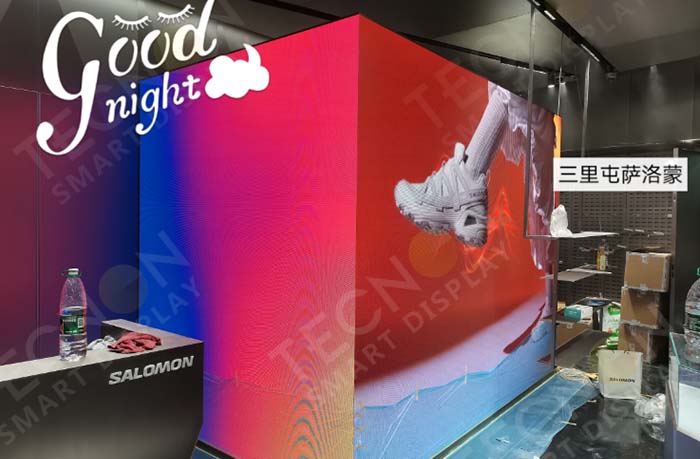
1. Start With Pixel Pitch and Viewing Distance
Pixel pitch affects how sharp your content looks. A small pixel pitch offers high resolution, which works well for indoor retail, airports, and museums. A larger pixel pitch targets outdoor or long-distance viewing.
When you design content, imagine how far away your audience stands. If people usually watch from 10 to 15 meters away, tiny text or detailed icons won’t help. Use bold shapes, clean lines, and strong contrast. This approach lets your visuals stay readable on different LED systems, including digital signage screens, retail LED panels, and indoor LED video displays.
This principle also helps your content scale across mixed environments. A simple layout performs better than a detailed one because it reduces distortion when resized.
2. Use Color and Contrast That Match Real-World Lighting
LED screens fight with ambient light, especially in outdoor areas and bright indoor zones. High brightness helps, but your content still needs color balance.
Use high-contrast color combinations. Warm tones often stand out better under strong light. Avoid subtle gradients because they can disappear on mid-range LED panels. Test your designs in both bright and dim environments to make sure the display stays clear.
If your screen sits near storefront lights or open-air skylights, increase contrast in text blocks and key graphics. This small improvement creates a big difference in readability.
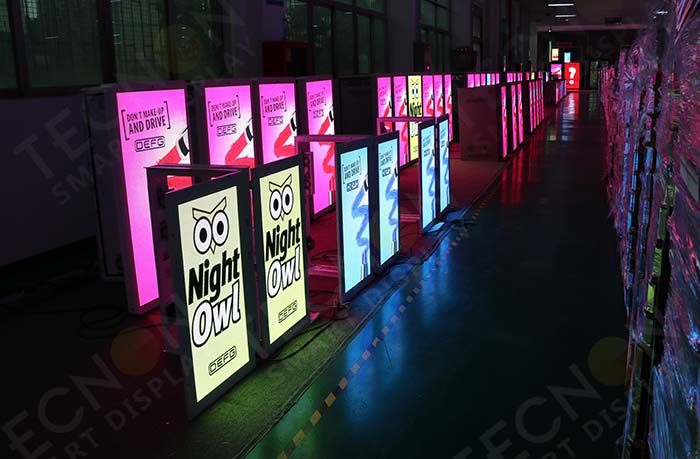
3. Choose Typography That Works on Any LED Display
Text clarity can make or break your content. Simple fonts work best. Sans-serif styles are usually easier to read on LED display boards and other commercial digital displays. Avoid ultra-thin strokes. Thick and stable letterforms stay clear even when the viewer stands far away.
Also, treat spacing as part of the design. Increase letter spacing slightly, especially for outdoor digital boards or transportation signage. Generous spacing helps reduce blur and keeps every letter recognizable.
If your message must appear on multiple LED formats—such as advertising displays, wayfinding screens, or stadium LED systems—stick to a flexible typography system. Consistency improves brand identity and makes content edits easier.
4. Keep Layouts Clean and Meaningful
Busy layouts confuse viewers. When your design jumps between tiny icons, thick borders, and too many colors, the message becomes hard to digest.
Focus on hierarchy. Show the most important element first. Use simple blocks and a balanced grid. This clean style adapts well to indoor retail LED displays, outdoor media facades, and showroom LED walls.
Remember that LED screens refresh rapidly. Fast motion or heavy animations can look chaotic. Use smooth transitions, slow movements, and purposeful direction. Motion should help deliver information—not distract from it.
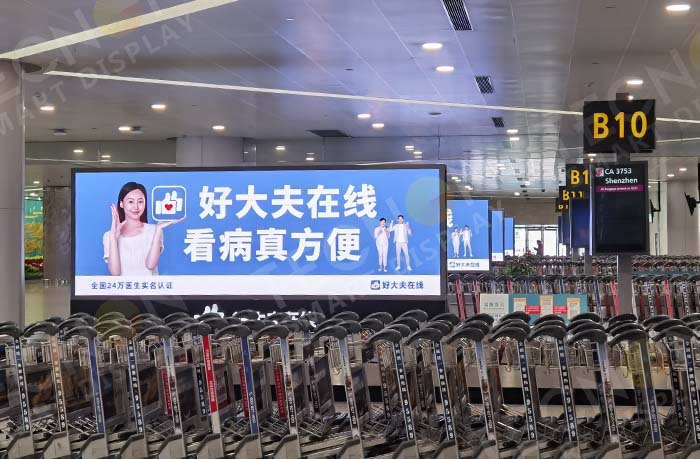
5. Adapt Content to the Screen Ratio
LED display boards come in many shapes and layouts, from tall vertical screens to ultra-wide storefront panels. Normally, designers need to prepare multiple versions of the same content to avoid stretching or cropping. However, modern LED systems make this process easier. Our LED screens support adaptive content scaling, so your visuals automatically fit the screen ratio without distortion. You only need a single layout, and the system adjusts it in real time.
Even with this smart feature, it still helps to keep your design clean and modular. A simple hero visual, flexible typography, and clear hierarchy allow the adaptive engine to deliver the best results across different display formats. This combination keeps your content sharp whether it’s on a storefront LED wall, a retail banner screen, or a custom-shaped installation.
6. Test Your Content Before Publishing
Testing matters more than fancy effects. Show your design on a real display or a simulation tool. Look at it from different distances. Check brightness, color accuracy, and animation smoothness.
During testing, you may notice that text appears too small or transitions move too fast. Fix these issues early to avoid wasting screen time on weak visuals.
A quick test round often reveals problems that are invisible on a laptop. It’s one of the most effective ways to upgrade content quality for any LED screen network.
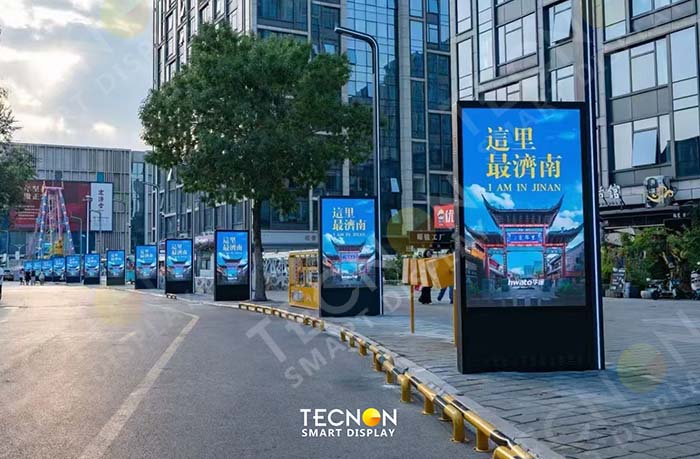
Conclusion: Great LED Content Comes From Understanding the Screen
The secret isn’t complicated. When you design with pixel pitch, viewing distance, contrast, typography, and motion in mind, your content looks great on almost any LED display boards. The more you understand how real people view digital screens, the better your visuals become. LED technology keeps evolving, but these core principles will always help your content stay clear, striking, and effective.